Narrow Gauge Track Width: 750 mm and 760 mm
Why 10 mm of difference decides vehicles, curves and building costs.
Read the articleNarrow Gauge in Eastern Europe
Narrow gauge railways in Eastern Europe are a chapter of transport history all their own, and in many places it can still be experienced firsthand. This guide offers independent information on slim tracks, historic trains and railway museums in the region. The articles help with trip planning and explain how these railways were once run and why their heritage is so closely tied to local history.
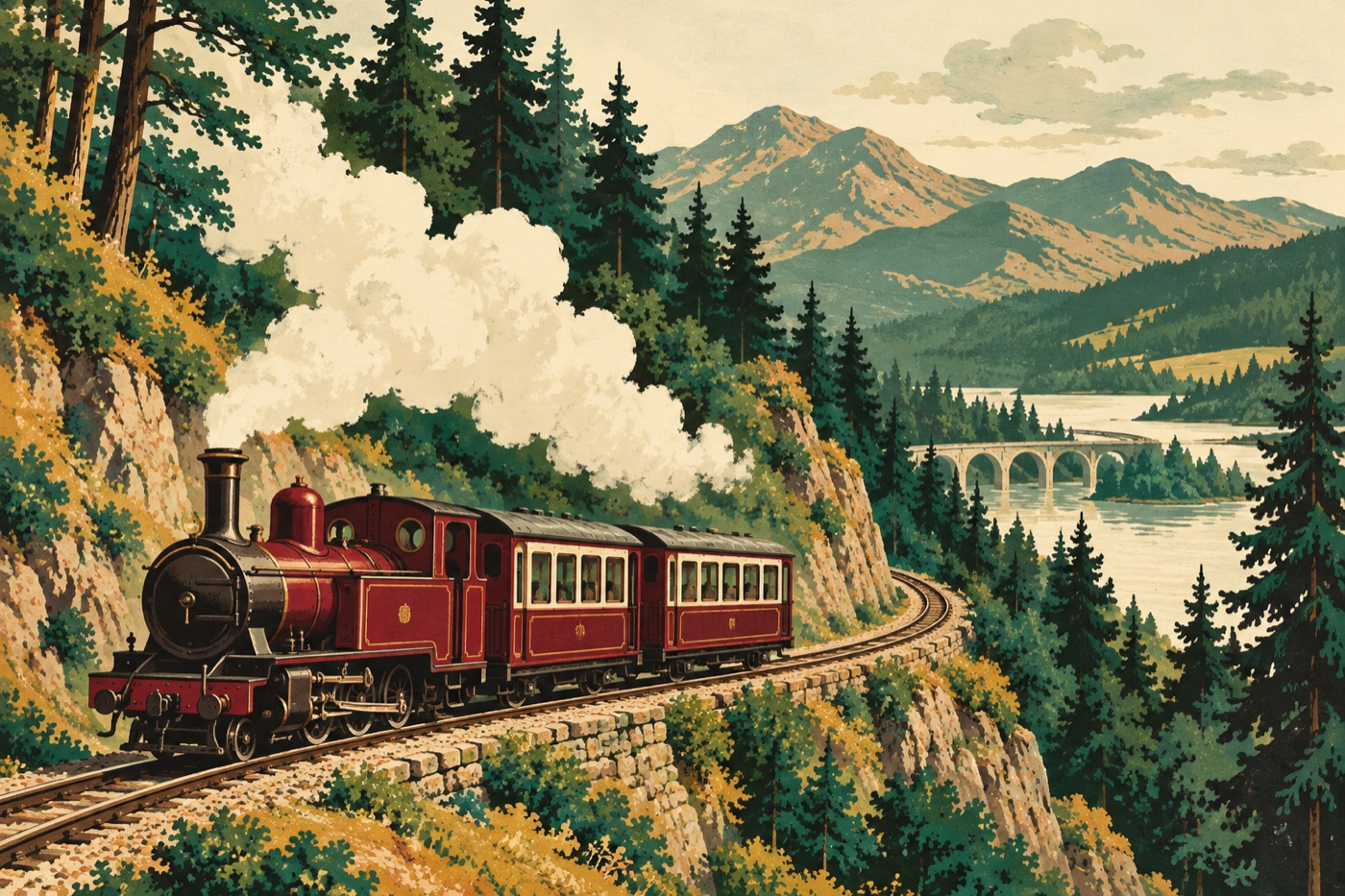
Narrow gauge railways have a smaller track gauge than standard gauge. That made them cheaper to build and let them run through difficult terrain. Many of these lines began as forest railways, peat railways, sugar beet railways or county railways. They carried timber, hauled peat, delivered beets to the sugar factory and handled everyday traffic between smaller towns. Today some of them are used for tourism.
Passengers ride in trains that recall the region's earlier daily life. The lines often lead through forests, fields and valleys. Because of this change, railway heritage is no longer preserved only in archives: the narrow gauge line itself becomes the destination.
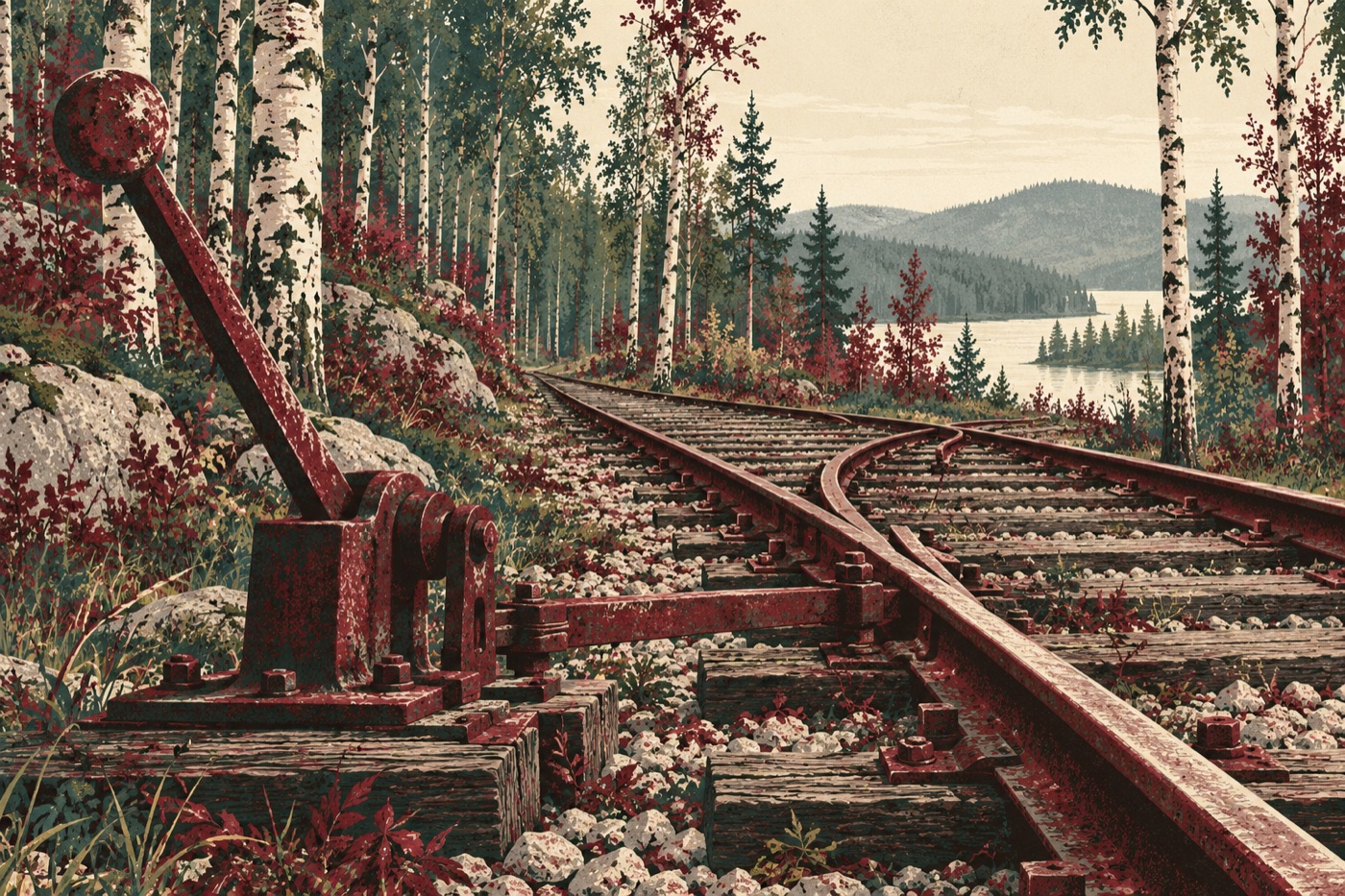
The guide divides the subject into several areas. The first is devoted to track gauges, because they explain the differences between lines and vehicles. The Baltic countries follow, then Poland, where the museum in Sochaczew is an important stop. A separate article covers the Carpathians and presents the narrow gauge lines in Romania and Slovakia.
The regional articles each introduce the narrow gauge railways of a different area. Track gauges serve as the common reference point for all the route descriptions. With the examples from the Baltics, Poland and the Carpathians, you can compare how tourist railways are run in different places and how railway museums look after the heritage. Every part also presents museums, since they preserve vehicles, documents and knowledge of how the lines used to operate. Combining route descriptions with museum portraits gives a fuller picture than itineraries alone. That makes it easier to decide which places can be linked on one trip.
Why 10 mm of difference decides vehicles, curves and building costs.
Read the articleTwo 750 mm lines compared, with operators and key facts.
Read the articleThe museum in Sochaczew, with its vehicle collection and museum line.
Read the articleThree 760 mm forest railways between Romania and Slovakia.
Read the article
The texts provide a basis for trip planning but do not replace a current timetable. Timetables and running days change, so check the latest details with the operator before you travel. This applies to every tourist line described, including supposedly familiar ones.
This resource is not connected with any operator, museum or association. The articles are for information only and do not promote any particular line. Readers who already know their destination can go straight to the matching article. Anyone new to the subject should read the section on track gauges first.
Read the article on the region you want to visit and discover the narrow gauge railways of Eastern Europe, from the Baltic Sea to the Carpathians, along with the railway museums and the railway heritage of these areas.
For a change of pace away from railways, these subjects offer plenty of other reading.
scottish clan history
Scottish clans trace their roots to Highland and Lowland families who gathered under a chief and shared a surname. Tartans, gatherings and surviving place names keep that heritage visible today.
urdu poetry
Poets writing in Urdu have long favored the ghazal, whose couplets can each be enjoyed alone. Themes of love and separation run through verses that remain popular at recitals.
kuala lumpur neighbourhoods
Districts of Kuala Lumpur range from colonial era quarters to glass towered business areas. Street food, markets and temples give each neighborhood its own character.
air charter guide
An air charter guide helps travelers understand the options when booking a private aircraft for a trip. Questions of cost, aircraft class and the airports available often decide the plan.
family history research
Family history research builds a line of ancestors from birth, marriage and death records. Census returns, wills and parish registers help fill in the gaps between generations.
cuban genealogy research
Researchers of Cuban genealogy work with civil registry books, church baptism entries and records kept on both sides of the Florida Straits. Patience pays off, since surnames and spellings were often recorded in varying ways.
pcs move checklist
A permanent change of station, known as a PCS move, is a relocation ordered for a member of the US military. Checklists cover packing, paperwork, housing and school transfers in the right order.
dalits in nepal
Dalits in Nepal are communities historically placed at the bottom of the caste system and long faced discrimination. Legal protections exist today, though advocates point to work that remains in education and daily life.
hardware product design
Designing a hardware product means turning an idea into something that can be built, tested and sold. Engineers balance materials, manufacturing methods and the way people will actually hold and use the object.
professional wrestling history
Pro wrestling grew out of carnival strongman acts into a form of staged athletic drama. Territories, famous champions and long running feuds fill the sport's history books.
fractal art
Fractal art is made from mathematical formulas that repeat the same pattern at ever smaller scales. The results are swirling, detailed images that often resemble natural forms like ferns or coastlines.
offshoring and globalization
The offshoring debate asks what happens to workers and towns when companies shift production overseas. Economists point to lower prices for consumers, while critics focus on lost local employment.
asian cinema guide
A guide to Asian cinema can range from the golden age of Japanese studios to the rise of Korean and Hong Kong films. Viewers often start with a few well known directors and branch out from there.
automated theorem proving
Automated theorem proving uses computers to find or check proofs of mathematical statements. Researchers in logic and software verification build such provers to reduce human error.
interdisciplinary arts festival
An interdisciplinary arts festival brings music, dance, visual art and performance into one program. Audiences move between forms and often meet artists who work across several of them.
high school sports team management
Running a high school sports team means handling lineups, practice plans, medical forms and bus schedules. Software and clear routines help coaches stay organized through the season.
welsh rugby history
Rugby in Wales has deep roots in mining valleys and industrial towns, where clubs were central to community life. International matchdays in Cardiff are known for loud singing and a passionate crowd.
romanesque architecture france
Romanesque churches in France are recognized by round arches, thick walls and small windows. Regional schools, from Burgundy to Auvergne, developed distinct styles of carved capitals and towers.
breton culture
Brittany keeps a Celtic heritage that shows in its language, music and festivals. The Breton language, folk dancing and seaside traditions are central to how the region sees itself.
shoujo manga
Italian fans of shoujo manga follow stories of romance, friendship and growing up in translated volumes. Magazines, conventions and online communities help readers discover new titles.