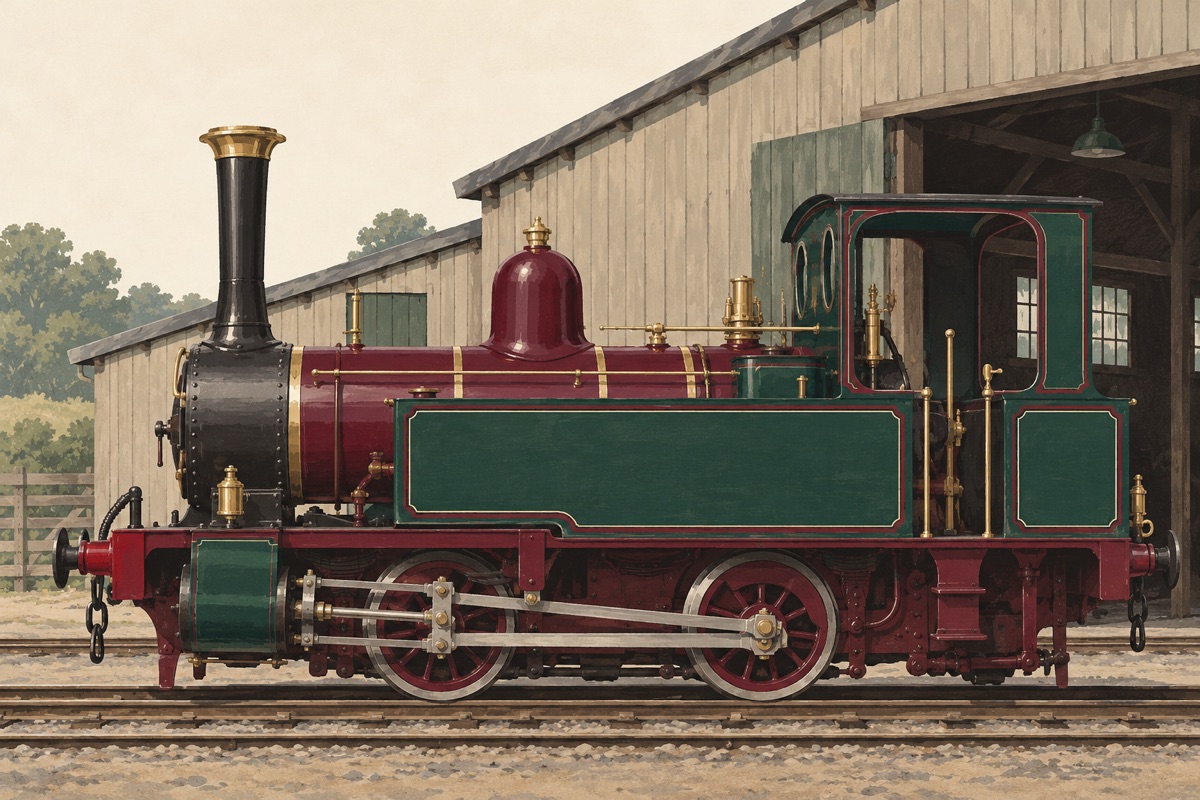
Narrow Gauge Track Width: 750 mm and 760 mm
Lithuania, Latvia, Poland, Slovakia and Romania all have railways whose tracks are narrower than standard gauge. The gauge determines which vehicles can run on a line, how tight the curves may be and how much construction costs overall. So why does a 10 mm difference between 750 and 760 mm matter so much? This article explains.
What Is the Gauge of a Narrow Gauge Railway?
Track gauge is the distance between the inner edges of the two rails. In Europe, standard gauge is 1435 mm. On a narrow gauge railway this distance is smaller.
Two gauges are especially common in the region: 750 mm and 760 mm. At first glance they hardly differ, but in practice they are two separate systems whose vehicles and tracks are not compatible with each other.
Narrow Gauge 750 mm and 760 mm: Where to Find Them
The 750 mm gauge is widespread in many countries of the region. Examples are the Aukštaitija line in Lithuania, the Gulbene to Alūksne line in Latvia and the museum in Sochaczew in Poland. Narrow gauge railways with a 750 mm gauge can therefore be experienced in three different countries.
The 760 mm gauge is found in Slovakia and Romania. The Čierny Hron forest railway in Slovakia and the line in the Vaser Valley in Romania have exactly this measure. A forest railway shows the advantages of the narrow track especially well: it can be routed through difficult terrain and is cheaper to build.
Why Do 10 mm Count?
A difference of 10 mm is considerable, because vehicles made for 750 mm cannot run on tracks of a different gauge. The same applies to cars and locomotives built for 760 mm. The wheels must fit the track, and a deviation like this makes the ride impossible. For that reason, lines with these two gauges cannot simply be joined.
The same goes for the relationship between narrow and standard gauge. Moving goods over to a line with a 1435 mm gauge means extra effort. Narrow gauge and standard gauge railways are therefore two separate systems that can be linked only with some effort.
Advantages and Limits of the Narrower Gauge
A narrower gauge allows tighter curves and a route through difficult terrain. At the same time, construction is cheaper. That explains why so many narrow gauge lines were built where a wider gauge would have been expensive.
These clear advantages come with limits, though. Narrow gauge vehicles and tracks are smaller, so the weight and speed of trains are limited. These railways are therefore better suited to difficult terrain than to moving heavy loads quickly over long distances.
Summary
The gauge determines which vehicles can run on a line. Standard gauge measures 1435 mm, and among narrow gauge railways 750 mm and 760 mm are the most common. This knowledge is helpful when planning a visit to a line or when reading about forest railways.